Guardian Visitor Visa Assistance — New Zealand

Be there for your child's school years in New Zealand.

Stay in New Zealand as the parent or guardian of a young child studying here on a student visa.

Your child is studying in New Zealand — and you want to be the parent who’s there at the school gate, not the one watching from the other side of the world. The Guardian Visitor Visa is the pathway that lets one parent or legal guardian live in New Zealand for the duration of a child’s student visa, but the application is more demanding than its “visitor visa” label suggests. We help families get the application right the first time, so the focus stays on the school year, not the paperwork.

What is the Guardian Visitor Visa?

The Guardian Visitor Visa is a temporary visa issued by Immigration New Zealand to a parent or legal guardian of a child who holds a current New Zealand student visa. It allows the holder to live in New Zealand alongside the child for the duration of the child’s student visa, subject to a “live with and care for” condition.

Only one parent or legal guardian may hold this visa at any given time, even where more than one child is studying in New Zealand. The child must generally be 17 or younger, or enrolled in school years 1 to 13.

There is an age cliff-edge worth knowing about: where the child is enrolled outside school years 1 to 13, the guardian visa can generally only be granted up until the day before the child turns 18 — even if the child’s own student visa runs longer. For families with children studying at tertiary level under 18, this can change the planning conversation significantly.

Applicants must also meet what Immigration New Zealand calls the bona fide applicants test (the genuine intentions test), along with standard health, character, funds, and onward travel requirements.

Grandparents and other relatives generally do not meet the legal definition of guardian unless that guardianship is legally recognised. The visa does not permit work in New Zealand for a New Zealand employer (with limited exceptions covered below). Study is permitted only on a limited basis. Partners and other dependent children are not covered by this visa and would need their own.

If you do not need to be present to care for a child on a student visa — for example, if you’re visiting more briefly, or if your situation is closer to a Parent Boost or partner pathway — a different visa is likely to be the right fit.

When professional help makes a difference

Most Guardian Visitor Visa applications are not complicated by themselves. Difficulty tends to arrive through the surrounding circumstances — the family structure, the child’s school situation, or timing.

  • When your guardianship status isn't a simple birth-certificate case

    If your guardianship of the child rests on a court order, an adoption, foreign legal documents, or any arrangement that goes beyond a birth certificate, the evidence has to be assembled carefully. Translations, certifications, and the way guardianship is recognised across jurisdictions can affect how Immigration New Zealand reads the application.

  • When your child's student visa or schooling situation is changing

    A child changing schools, moving between year levels, finishing one course and starting another, or having their student visa renewed can all affect the alignment of your guardian visa. Where the timing is tight, getting the dates and the supporting evidence right matters more than usual.

  • When both parents want to be in New Zealand

    Only one parent or legal guardian can hold the Guardian Visitor Visa at a time. Families with two parents who both want to be present often need a coordinated strategy across two different visa categories. Working out which parent applies for what, and in what order, is the kind of decision that benefits from a conversation rather than a guess.

  • When you have prior visa history, character flags, or health concerns

    Health and character requirements apply to Guardian Visitor Visa applications the same way they apply to other visitor visas — there's nothing Guardian-specific here. But when your history includes a prior refusal, time spent in countries with higher tuberculosis incidence, or character matters from earlier in life, the standard requirements take more work to satisfy. We can assess what needs to be disclosed, what evidence supports the application, and how to present the situation clearly without creating new questions.

  • When you're applying onshore and timing is tight

    If you are already in New Zealand on a different visa and your current visa is close to expiring, the interaction with an Interim Visa and the order of applications matters. Mistakes here can leave you without lawful status.

How we help

  • Eligibility and pathway assessment

    You'll know whether the Guardian Visitor Visa is the right pathway for your situation before you spend any further time on it. We look at the family structure, the child's student visa status, and the broader picture — including whether a different visa might serve you better — and tell you what we see. This includes assessing how Immigration New Zealand's bona fide applicants test (the genuine intentions test) is likely to apply in your situation, since this is a discrete requirement on top of the guardian-specific rules.

  • Guardianship evidence preparation

    You'll know your guardianship is documented in a way Immigration New Zealand can verify. We work through the documents proving your relationship to the child — birth certificates, adoption papers, court orders, foreign legal recognition where relevant — and identify any translations, certifications, or supporting affidavits the file may need.

  • Funds, accommodation, and onward travel evidence

    You'll have a clear picture of what financial and travel evidence the application needs, before lodgement rather than after a request for further information. We review your bank statements, accommodation arrangements, and onward travel evidence against the categories Immigration New Zealand expects to see.

  • Application lodgement and case management with INZ

    You'll know exactly who to contact and where the application is up to, at any point in the process. We prepare and lodge the application, respond to any requests for further information from Immigration New Zealand, and keep you informed at each stage rather than leaving you to chase the file.

  • Variations of conditions

    You'll know what's possible if your circumstances change after the visa is granted, and where the limits are. The "live with and care for" condition is strict, and Immigration New Zealand has been deliberate about the variations available to guardians. Approved variations for part-time work are confined to a narrow school-hours window on weekdays, and any work variation also depends on the proposed employer's compliance history with employment standards. Variations for part-time study are also possible. Variations for emergency departures from New Zealand can be requested where the situation justifies it. We can advise on whether a variation is realistic in your circumstances and prepare the request.

  • Renewals and transitions as your child's study continues

    You'll have a plan for what happens when your child's student visa is renewed, when they change schools, or when they approach the age cliff-edge. Worth knowing: when you apply for a further guardian visa, immigration officers are required to consider whether you actually lived with and cared for the student during your previous visa. This makes the renewal application backward-looking in a way most visitor visa renewals are not — and it's a reason to think about how the live-with-and-care-for condition is being met from day one of the first visa, not just at renewal time.

Common risks and how to reduce them

  • Guardianship documentation gaps

    Where guardianship rests on anything more complex than a birth certificate, missing or incorrectly translated documents are a common reason for applications to stall. Preparing the guardianship evidence carefully, before lodgement, is the most reliable way to reduce this risk.

  • The "live with and care for" condition

    This condition is more consequential than most visitor visa conditions. Under New Zealand immigration law, a guardian who breaches the live-with-and-care-for condition — whether by withdrawing support or by being absent from New Zealand without an approved variation — creates deportation liability for themselves under section 157 of the Immigration Act 2009. There is also a downstream risk: where the guardian's presence and support was material to the school's decision to enrol the child, the guardian's withdrawal can in some circumstances make the <strong>child</strong> liable for deportation as well. None of this is intended to alarm — most families meet the condition without difficulty — but it is the reason to understand the condition fully before applying, to know when a variation is needed (for example, for an emergency departure), and to plan around it from the start rather than discover it later.

  • The single-guardian-at-a-time rule

    Families sometimes assume both parents can apply. Only one parent or legal guardian holds the Guardian Visitor Visa at any time, regardless of how many children are studying. Planning the family's pathway as a whole — not just one application — avoids the second parent being caught short.

  • Misalignment between guardian and student visa expiry dates

    If the child's student visa is renewed for a new school year, the guardian visa needs to keep pace. Tracking renewal timing and applying early reduces the risk of a gap in lawful status.

  • Subjective assessment of genuine intentions

    Immigration New Zealand assesses whether the applicant genuinely intends to leave at the end of the stay. Travel history, ties to the home country, and the consistency of the application all play into this. Presenting the situation clearly and addressing potential questions in advance helps.

  • Health and character flags surfacing late

    Chest X-rays, medical certificates, and police certificates can be required depending on the length of stay and the applicant's history. These take time to obtain. Identifying what's needed at the outset prevents delays later.

What the Guardian Visitor Visa does not cover

The Guardian Visitor Visa does not permit working in New Zealand for a New Zealand employer (with limited exceptions), it is not a residence pathway, and it does not extend to your partner or other dependent children — they would need their own visas.

It also doesn’t help if you’re not the legal guardian. Grandparents, uncles, aunts, and other relatives caring for a child generally don’t meet the definition unless legal guardianship has been formally recognised.

If your situation falls outside the Guardian Visitor Visa, the right page is likely one of:

  • Visitor Visa (General) — for shorter visits, or for relatives who are not legal guardians
  • Partner of a Student Work or Visitor Visa — for partners of student visa holders
  • Parent Boost Visitor Visa — for parents of New Zealand residents or citizens seeking longer stays
  • Parent Resident Visa — for parents of New Zealand residents or citizens seeking residence
  • Student Visa — the child’s underlying application

Examples of situations we have helped with

Every case is different. The following examples are illustrative and do not guarantee a particular outcome.

  • A guardianship-by-court-order case

    A parent applied to be the guardian of a child whose legal guardianship had been formally transferred by court order in their home country. The guardianship documents were not in English and the relationship to the child was not obvious from the family's identity documents alone. We worked through the certified translations, prepared a clear narrative explaining the legal guardianship, and assembled the supporting evidence before lodgement. The visa was granted.

  • An onshore application with tight timing

    A parent was already in New Zealand on a different visa when their child's student visa was issued. Their existing visa was close to expiring. We assessed the timing, prepared the Guardian Visitor Visa application and lodged it before the existing visa expired, with the Interim Visa mechanism providing lawful status during processing. The visa was granted without a gap in status.

  • A two-parent coordination case

    A family needed both parents in New Zealand while their child completed secondary school. Only one parent could hold the Guardian Visitor Visa. We worked through the options for the second parent, prepared both applications in a coordinated sequence, and helped the family understand the conditions each visa carried. Both parents were able to be present during the school year.

Testimonials

What clients are saying

  • ★★★★★

    His response to my questions and any queries was super fast

    It was the best decision for me to choose Mr. Yoon as my immigration lawyer. My best favourite thing from him among many others, his response to my questions and any queries was super fast! Highly recommended!

    Woojae S
    Woojae S, South Korea
  • ★★★★★

    His approach and service are top class

    Michael is very professional and one of the top immigration lawyers. His approach and service are top class. His firm is very dedicated towards their clients. I will always be grateful for his help and advice.

    Vishal T
    Vishal T, India
  • ★★★★★

    Exactly knows what a case officer or an applicant needs

    1. Michael is very professional 2. He is very Friendly & always responds well to clients matter 3. Moreover he exactly knows what A case officer or a applicant needs to be touched up 4. Undoubtfully A best immigration Lawyer in New Zealand from my Experience since 2019 and am recommending to anyone who needs an assistance in dealing with Immigration matters.

    Sivaraman M
    Sivaraman M, India
  • ★★★★★

    I'm so satisfied with his valuable suggestions

    By the bless of Almighty God my visa is approved with the help of Immigration lawyer Michael Yoon. I’m very much thankful to him for his service. I only contacted him through email and didn’t need to talk over phone as he responded all my emails on time. I’m so satisfied with his valuable suggestions for other necessary steps. Highly recommended and thanks again ????

    Lamia M
    Lamia M, India
  • ★★★★★

    It's hard to find a such conscientious and dedicated lawyer as Michael

    Exceptional service from Michael. Highly recommended to anyone who struggles with their visa applications. It was my first time to include my partner in my application but he made the process so easy with all the detailed guidance. He saved me from all the unnecessary stress. He works 24/7 to have things done in time, no matter when I ask him about anything, I always get a prompt reply from him. It’s hard to find a such conscientious and dedicated lawyer as Michael. I don’t have words to describe how grateful I am. I am a resident now and he is the person who contributed to this dream come true. Thank you Michael, hope you all the best in life!

    Hannah L
    Hannah L, Vietnam
  • ★★★★★

    Michael provided clear, concise guidelines and invaluable advice

    Michael is an exceptional gentleman and immigration lawyer. We reached out after seeing the many 5 star reviews and testimonials for my application of a Partner visa of a AEWV holder. Michael provided clear ,concise guidelines and invaluable advice during the application process. My Partner visa was approved onshore only after 12 days ! We highly recommend anyone reaching out to Michael for your visa application requirements.

    Clay C
    Clay C, Singapore

Frequently asked questions

No — you can apply for the Guardian Visitor Visa yourself, and many parents do. Whether professional help is worth it depends on your situation. If your guardianship is straightforward (you are the child’s biological parent, your documents are in English, your travel and immigration history is clean, and the timing isn’t tight), a self-lodged application is realistic. If any of those things are different — guardianship by court order, foreign-language documents, prior visa refusals, an onshore application close to a visa expiry, or both parents wanting to be in New Zealand — the cost of getting it wrong tends to be higher than the cost of getting help.

No. Immigration New Zealand only issues the Guardian Visitor Visa to one parent or legal guardian at a time, even if you have more than one child studying in New Zealand. If both parents want to be in New Zealand together, the second parent generally needs a different visa — the right pathway depends on the family’s situation, work status, and longer-term plans. This is one of the more common reasons families come to us early: the second parent’s pathway needs to be worked out alongside the guardian application, not after it.

Your Guardian Visitor Visa is tied to the validity of your child’s student visa. If the child’s visa is renewed for a new school year, you generally need to apply for a new guardian visa to match the new period. If the child’s student visa is cancelled or they stop studying, the basis for your visa may fall away. There is also an age-related cliff-edge to be aware of: where the child is studying outside school years 1 to 13 and turns 18 during their student visa, the guardian visa is generally only granted until the day before the child’s eighteenth birthday — even if the child’s student visa runs longer. This can affect families with children studying at tertiary level under 18. When you apply for a further guardian visa, Immigration New Zealand will also consider whether you actually lived with and cared for the child during your previous visa. Planning around the renewal cycle, the age cliff-edge, and the backward-looking compliance check is something we help families manage in advance rather than at the last minute.

The Guardian Visitor Visa covers you only. Your partner and any other children would each need their own visa. The right visa for them depends on your partner’s circumstances, the other children’s ages, and whether they intend to study, work, or visit. We often help families work out a coordinated set of applications — guardian, partner, and any siblings — so the family travels and arrives together.

The default position is no — the Guardian Visitor Visa does not permit working for a New Zealand employer. Guardian visa holders are also explicitly not eligible for the Accredited Employer Work Visa, the Specific Purpose or Event work visa, or a student visa, so the standard “switch to a work visa” route is closed. Two limited exceptions exist. First, working remotely for an employer or client based outside New Zealand is generally permitted. Second, you can apply for a variation of conditions to your existing guardian visa to allow part-time work — but that variation comes with real constraints. Approved part-time work is restricted to a narrow school-hours window on weekdays (Immigration New Zealand has set this deliberately so that work doesn’t interfere with the live-with-and-care-for purpose of the visa), and the variation will not be granted if your proposed employer has compliance issues with employment standards. If income during your stay matters to your plans, this is worth discussing before you apply, not after the visa is granted.

The Guardian Visitor Visa carries a “live with and care for” condition, which means you are expected to be living with your child in New Zealand for the duration of the visa. Short emergency absences are recognised, but they generally require a variation of conditions from Immigration New Zealand to keep your visa valid while you are away. We can help you understand whether your situation qualifies and prepare the variation request.

You may be eligible if you are the child’s legal guardian, and the legal guardianship is properly recognised. This typically means a court order, formal adoption, or another legal arrangement that Immigration New Zealand can verify. Grandparents, aunts, uncles, and other relatives caring for a child generally do not meet the definition unless legal guardianship has been formally recognised. Where the guardianship is based on documents from another country, translations and certifications matter. This is one of the situations where preparation makes the most difference, because the application can stand or fall on how the guardianship evidence is presented.

If you are already in New Zealand on another visa — for example, a visitor visa, work visa, or partner visa — you can generally apply for the Guardian Visitor Visa from inside the country, provided your child holds a current student visa and you meet the other requirements. The timing matters: if your existing visa is close to expiring, you’ll want the Guardian Visitor Visa application lodged before the expiry, and the Interim Visa mechanism may keep you lawfully in New Zealand while Immigration New Zealand processes the new application. Onshore applications with tight timing are one of the situations where mistakes are most expensive, so it’s worth getting the sequence right the first time.

Credentials

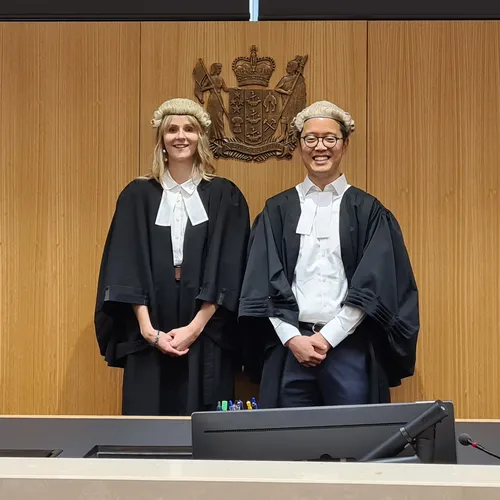
MyLaw is a New Zealand law firm with a focus on immigration law. Our team is led by Michael Yoon, a New Zealand lawyer and member of the New Zealand Law Society. We hold current practising certificates and work across a range of immigration matters, from visitor visa applications to complex cases involving prior refusals, character issues, and multi-visa strategies.

Get in touch

If you’re not sure whether the Guardian Visitor Visa is the right pathway for your family, or if your situation involves any of the complications described above, we’d be glad to talk it through. Get in touch for an initial discussion of your circumstances and we’ll let you know how we can help.

We work with families on both straightforward Guardian Visitor Visa applications and complex cases involving guardianship recognition, prior visa history, or coordinated multi-visa family strategies.