Accredited Employer Work Visa Assistance — New Zealand

Accredited Employer Work Visa — Legal Help for Applicants and Employers

From first application through mid-visa changes and employer compliance, we handle the immigration and employment-law sides of your AEWV together so nothing falls through the gap.

The basics

What is the Accredited Employer Work Visa?

A temporary work visa from Immigration New Zealand, granted on the basis of a specific job offer from an employer accredited to hire migrants for that role.

  • Purpose

    Employer-led temporary work visa for a specific full-time job with an Immigration New Zealand–accredited employer.

  • Length of stay

    Varies by skill level, wage, and occupation classification. Policy settings in this area are subject to change.

  • Work rights

    Tied to the named employer, role, and work location set out in the approved Job Check. A change to any of these requires a new application or a variation of conditions.

  • Support family

    Does not include partners or dependent children. Family members apply separately under their own criteria, on a Partner of a Worker Visa or Dependent Child of a Worker Visa.

  • Residency pathway

    Not a residence pathway on its own. The Skilled Migrant Category and the Green List Straight-to-Residence and Work-to-Residence routes provide separate pathways.

  • Compliance

    A second job is not permitted without a variation of conditions.

Wondering if AEWV is the right route?Settings shift, and the situation matters more than the policy summary. Talk to us before you start so we can match the right route to your facts.

Starting a new role in New Zealand should feel like the beginning of the job, not a fresh round of paperwork.

When our help makes a difference

Where we step in — and what we do

Some immigration processes are approved without much friction. Some situations carry real risk of delay, hard pushback or decline.

Real cases · Illustrative

Situations we've helped with

Every case is different. These are illustrative and don't guarantee a particular outcome.

Avoidable problems

Common risks — and how to reduce them

Visitor Visa applications can be declined or delayed for reasons that are sometimes avoidable with better preparation.

  • 01

    Genuine intentions assessment

    Weak ties to a home country, inconsistent travel history, or vague explanations of the purpose of a visit can raise concerns. A well-prepared application addresses these points directly with supporting evidence.

    High impact
  • 02

    Insufficient financial evidence

    Bare-minimum bank balances, unclear income sources, or missing sponsorship documentation can lead to requests for further information or decline.

    High impact
  • 03

    Health and character flags

    Applicants from countries without a low TB incidence may need a chest X-ray. Those with criminal history may need police certificates. Out-of-date evidence delays processing.

    Medium impact
  • 04

    Passport validity

    Your passport must be valid for at least three months beyond your planned departure date. Travelling on a passport close to expiry can result in being refused boarding or refused entry at the border.

    Medium impact
  • 05

    Misrepresentation

    Providing false, misleading, or incomplete information — even unintentionally — can result in decline, and may affect future visa applications.

    High impact
  • 06

    Timing

    Applying too close to your intended travel date, or failing to apply for an extension before your current visa expires, creates complications that are difficult to resolve.

    Manageable

Important constraints

What the Accredited Employer Work Visa doesn't cover

The AEWV is a temporary, employer-specific visa. If your plans go beyond that — a different employer, a residence pathway, or family travelling with you — a different category applies.

Not permitted

The AEWV is the wrong fit if you want to do any of these.

Lodging under the wrong category wastes time and money. We'll tell you up front if a different visa or pathway fits your situation.

  • Add a second job

    Not permitted without a variation of conditions.

  • Change employer, role, or location

    A job-change application is required before you start the new role.

  • Bring partner or dependent children on the same visa

    Family apply separately. See Partner of a Worker Visa and a Dependent Child of a Worker Visitor or Student Visa.

  • Live in New Zealand permanently

    Not a residence pathway on its own. See Skilled Migrant Category, Green List Straight to Residence, or Green List Work to Residence.

  • Seasonal work

    Different visa categories apply. See the Work Visa hub.

Find the right pathway

Other options we can also help with

If a different immigration process fits your situation, we can take you there directly.

Working with us

What the process looks like

We will guide you step by step on your Accredited Employer Work Visa process, from start to finish.

  1. Initial enquiry

    Short email discussion to understand the job offer, the employer's accreditation and Job Check status, and whether AEWV is the right route to get you into that role. We'll tell you up front if a different pathway fits better.

  2. Service engagement

    Letter of engagement signed, invoice paid. We map the timeline against any current visa expiry, employer audit windows, or offer start date — so the work has a target, not just a process.

  3. Evidence preparation

    We gather what INZ needs to grant the visa for this specific role: skill and experience evidence, qualification assessment where required, the employment agreement, and supporting documents — addressing gaps before lodgement rather than after.

  4. Lodgement

    We file the application on your behalf and confirm receipt with Immigration New Zealand.

  5. Monitoring & response

    If INZ requests further information, we draft the response with you — promptly, in the right form. Most of the difference between a short delay and a long one happens at this step.

  6. Decision & next steps

    We walk you through the outcome. If granted, we explain the conditions tied to your employer, role, and location, and confirm any compliance steps your employer needs to take to support the visa. If declined, we work through the reasons and your realistic options.

FAQ

Frequently asked questions

Either a New Zealand lawyer or a licensed immigration adviser may assist with an AEWV matter. The choice often depends on what else is going on around the visa. Where the matter also touches employment law, a workplace change, or other questions that interact with visa status, having both perspectives in the same engagement avoids the risk of advice on one side contradicting advice on the other. As lawyers, we can cover both the immigration and employment-law dimensions in a single relationship. During an initial discussion we will be direct about what the engagement would involve for your situation.

A typical engagement starts with a scoping conversation, followed by a written engagement letter setting out what is included, who is involved, and how fees are structured. From there, the work generally moves through eligibility review, evidence preparation, agreement review where relevant, lodgement, and any follow-up with INZ. The shape of each stage depends on the complexity of the file — a well-documented single application looks quite different from a matter that spans an employment dispute, a variation of conditions, and a forward residence plan.

For most AEWV matters, fees are structured as a scoped engagement with either a fixed-fee component for defined stages (for example, evidence review or agreement review) or hourly billing where the work is less predictable. The engagement letter identifies which approach applies to which part of the work, and any assumptions on which a fixed fee relies. It is always reasonable to ask — before signing — how additional requests from INZ, a change of employer mid-process, or the emergence of a related issue would be treated. We prefer clients to raise scope questions early rather than absorb surprises later.

INZ may request further information or issue what is known as a potentially prejudicial information letter before deciding an application. Both invite a response, and both benefit from a considered one. We review the request against the file, identify the specific point being raised and the standard it is being measured against, and prepare a response that addresses the concern directly rather than restating the original application. The time available to respond is set by INZ and tends to be tight, so engaging early tends to leave more options open.

A decline is a setback, not necessarily the end of the matter. Depending on the reasons given and the visa type, options may include a reconsideration request, a section 61 request, further engagement with INZ on specific points, or an appeal to the Immigration and Protection Tribunal where an appeal right exists. We review the decline reasons against the record before recommending a next step, and we do not promise outcomes on any review pathway — each has its own threshold and its own risks.

Yes. These features are common enough that we have a structured way of working through them — clear disclosure to INZ, supporting material organised to the specific concern, and a submission that meets the issue on its own terms rather than around it. None of these items decides the application on its own, but each generally calls for more care in presentation than a standard form supplies. Where a character waiver may be relevant, we can advise on that pathway. Before taking instructions, we will give a candid view on what appears workable on the facts and on what may not be.

This is where the employment side and the immigration side most visibly pull on each other, and where the order of decisions matters. On the employment side, we can advise on the process leading to the end of the role — including consultation, notice, and any entitlements on exit — and on whether a dispute pathway is appropriate. On the immigration side, we can advise on the visa consequences, whether an interim visa is likely to be available, and how a job change application should be sequenced against a new offer. Treating the two lines together, early, is usually what keeps the most doors open.

Several AEWV settings — occupation classification, skill banding, stand-down treatment, and related residence pathways — are subject to periodic review and change. We prepare applications around current settings while noting the general direction of travel, rather than relying on any one threshold being permanent. Where a change lands during a live engagement, we assess whether transition arrangements apply, whether the application strategy needs to be reshaped, and whether any new evidence is required. We do not use policy uncertainty as a reason to rush clients; we use it as a reason to keep the file in a shape that can adapt.

Yes. We work with employers across a range of sizes — from single-hire accreditation reviews through to ongoing compliance programmes for employers with larger migrant workforces. Because we handle immigration and employment law together, employer clients get accreditation review, employment-agreement compliance, and visa support within a single relationship rather than coordinating across separate firms. The scope of the engagement is set during an initial discussion and reflected in the engagement letter, so both sides are clear on what is included.

Start the job. We'll handle the visa.

Whether your immigration process is straightforward or involves complicating factors, we can help you understand your options and put your best case forward.

Starting a new role in New Zealand should feel like the beginning of the job, not a fresh round of paperwork. When your Accredited Employer Work Visa application is well prepared — and the employment agreement behind it is reviewed with both immigration and employment-law requirements in mind — you can focus on settling in: the move, the role, and the longer plan for staying.

Whether the situation is a first AEWV application tied to a new offer, a change of employer partway through the visa, or an accredited employer’s compliance check before making a hire, the work tends to go better when the immigration side and the employment-law side are read together from the start.

About MyLaw

MyLaw is a New Zealand law firm with a focus on immigration law.

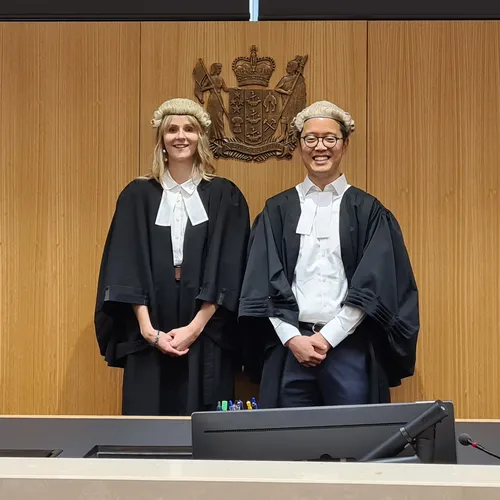
Our team is led by Michael Yoon, a New Zealand lawyer and member of the New Zealand Law Society.

He holds a current practising certificate and works across a range of immigration matters, from Accredited Employer Work Visa matters to complex cases involving prior refusals, character issues, and multi-visa strategies.

Get in touch.

If you are considering an AEWV application, working through a change mid-visa, or preparing the employment and accreditation side from the employer’s perspective, we are happy to discuss the situation before you decide how to proceed.
Contact us to arrange an initial discussion. We work with straightforward preparations and with more involved matters where several issues overlap.

5.0

420+ Google Reviews

420+ Google Reviews