Section 61 Request Assistance — New Zealand

Your visa has lapsed — understand where you stand before you act.

If you are unlawfully in New Zealand and considering a Section 61 request, we can help you see the full picture and prepare a case that reflects your circumstances.

The basics

What is the Section 61 Request?

A discretionary written request under section 61 of the Immigration Act 2009, asking that a visa be granted to a person currently unlawfully in New Zealand.

  • Nature

    A request mechanism, not a visa category. If granted, the visa issued is a standard temporary visa — visitor, work, or student — and occasionally a residence visa.

  • Assessment

    The Minister of Immigration has absolute discretion. In practice, most requests are decided by senior immigration officers under delegated authority, some by the Associate Minister, and a small number by the Minister directly.

  • Eligibility

    You must be physically in New Zealand and currently unlawfully here. Not available once a deportation order has been served.

  • Process

    A request may result in a grant, a decline, or no decision at all. There is no duty to consider, no duty to follow normal instructions, and no duty to give reasons.

  • Pathways

    No merits review of a Section 61 decline. Judicial review may be available in limited process-based circumstances after a decision.

  • Alternatives

    If you still hold a valid visa, including an interim visa, Section 61 is generally not the right tool yet. A new application or variation is usually the better route.

Not sure if Section 61 fits?The first question is usually not "how to write the request" but "is this the right tool at all". A short conversation can confirm which option fits your situation.

Being out of visa in New Zealand is an unsettling place to be — and the first job is to see the ground you are standing on clearly before deciding what to do next.

When our help makes a difference

Where we step in — and what we do

Some immigration processes are approved without much friction. Some situations carry real risk of delay, hard pushback or decline.

Real cases · Illustrative

Situations we've helped with

Every case is different. These are illustrative and don't guarantee a particular outcome.

Avoidable problems

Common risks — and how to reduce them

Visitor Visa applications can be declined or delayed for reasons that are sometimes avoidable with better preparation.

  • 01

    Genuine intentions assessment

    Weak ties to a home country, inconsistent travel history, or vague explanations of the purpose of a visit can raise concerns. A well-prepared application addresses these points directly with supporting evidence.

    High impact
  • 02

    Insufficient financial evidence

    Bare-minimum bank balances, unclear income sources, or missing sponsorship documentation can lead to requests for further information or decline.

    High impact
  • 03

    Health and character flags

    Applicants from countries without a low TB incidence may need a chest X-ray. Those with criminal history may need police certificates. Out-of-date evidence delays processing.

    Medium impact
  • 04

    Passport validity

    Your passport must be valid for at least three months beyond your planned departure date. Travelling on a passport close to expiry can result in being refused boarding or refused entry at the border.

    Medium impact
  • 05

    Misrepresentation

    Providing false, misleading, or incomplete information — even unintentionally — can result in decline, and may affect future visa applications.

    High impact
  • 06

    Timing

    Applying too close to your intended travel date, or failing to apply for an extension before your current visa expires, creates complications that are difficult to resolve.

    Manageable

Important constraints

What the Section 61 Request doesn't cover

Section 61 is one mechanism among several. It doesn't do the work that other pathways do — and using it when something else applies wastes a discretionary opportunity.

Not permitted

Section 61 is the wrong tool if any of these applies to you.

Using Section 61 in the wrong situation wastes a one-shot opportunity. We'll tell you up front if a different pathway fits.

  • You still hold a valid visa, including an interim visa

    A standard visa application, variation of conditions, or further temporary visa is usually the right route.

  • A deportation order has been served

    Section 61 is no longer available. See Resolve Issues for the deportation-process pathway.

  • You want a merits appeal of an immigration decision

    Section 61 has no merits review. See Immigration and Protection Tribunal Appeal.

  • You're responding to a Potentially Prejudicial Information notice

    That’s a separate process. See PPI Response.

  • You're seeking a special direction under the Immigration Act 2009

    A separate Minister-level mechanism that sits outside Section 61.

Find the right pathway

Other options we can also help with

If a different immigration process fits your situation, we can take you there directly.

Working with us

What the process looks like

We will guide you step by step on your Section 61 Request process, from start to finish.

  1. Initial enquiry

    Short conversation to understand where you stand, why your visa lapsed, and whether Section 61 is the right tool to regularise your status. We'll tell you up front if a different route fits better.

  2. Service engagement

    Letter of engagement signed, invoice paid. We open the file and set the timeline against your circumstances.

  3. Evidence preparation

    We gather what's needed to regularise your status under the specific visa class the request will point to: identity, the unlawful period explained, family or employment anchors documented, and any character or health matters addressed in context.

  4. Lodgement

    We submit the written request and supporting evidence to Immigration New Zealand.

  5. Monitoring & response

    If INZ raises questions or asks for further information, we respond with you. Depending on the matter, the Associate Minister's or Minister's office may also be involved.

  6. Decision & next steps

    We walk you through the outcome. If a visa is granted, we explain the conditions tied to the visa class issued and what comes next to maintain status. If declined, we discuss the limited next steps — including any judicial review considerations.

FAQ

Frequently asked questions

The quality of the written submission matters more in a Section 61 request than in most immigration processes. Because there is no application form to guide the structure, and because the decision-maker is under no duty to consider the request or to give reasons, the written case has to do the work that a guided application would normally do. It has to explain how unlawful status arose, why special consideration may be warranted, and what visa class is being sought — in a way that is internally consistent and supported by evidence. Professional legal support shapes that framing from the outset: identifying what to address, how to structure the narrative, and how to present the evidence so that the submission reads as a coherent case rather than a collection of documents. That preparation applies whether the situation involves a prior decline, character considerations, or a relatively contained set of facts — the discretionary nature of Section 61 means there is no version of this process where the written case does not carry the weight.

Most matters begin with an initial review of your situation. We work through your immigration history, your current status, whether a deportation order has been served, and the visa class that would make sense to request. The aim of that first conversation is clarity on whether Section 61 is the right route at all.
If it is, we move into drafting the written submission and assembling the evidence, and then lodge the request and handle any follow-up from Immigration New Zealand. If another route would suit you better — a standard visa application, a variation of conditions, or a different immigration pathway — we say so, and point you to where that work sits. You will not be steered into a Section 61 request if a simpler option is open to you.

Immigration New Zealand does not commit to a processing timeframe for Section 61 requests, and timeframes vary significantly from case to case. Some requests are decided within a few months; others take longer. Factors such as the complexity of the situation, the evidence provided, and INZ workload can all affect how long a request takes.
We do not promise a timeframe, and we are cautious about any source that does. What we can do is keep you informed along the way, respond promptly to any queries from INZ, and — where follow-up is appropriate after a reasonable period — raise that on your behalf.

A declined Section 61 request cannot be appealed on the merits. There is no right to have a different decision-maker reconsider whether the decision was correct. That is a feature of the statutory framework rather than a reflection of any particular case.
The options that may remain are limited and narrow in scope:
Judicial review in the High Court. This looks at the process by which the decision was made, not at whether the decision was correct. It is available only in limited circumstances.
An Ombudsman complaint. This addresses Immigration New Zealand’s handling of the matter, not the substantive outcome.
A fresh Section 61 request. Sometimes appropriate if there has been a material change in circumstances, though not always advisable.
Voluntary departure and a future application from overseas. Depending on timing and circumstances, this may preserve future visa prospects better than other options.
We can explain each of these in more detail, and give you a straightforward view on whether any of them is worth pursuing in your situation.

Deportation action is legally capable of continuing while a Section 61 request is under consideration. A pending request does not, on its own, create a formal suspension of deportation liability.
In practice, a well-prepared request is often a relevant factor in how INZ manages a situation, and deportation action may pause while the request is being looked at. That is a matter of how INZ exercises its discretion, not a legal entitlement. If deportation is a live concern alongside your request, it is important to say so at the first meeting. Deportation liability has its own appeal pathway through the Immigration and Protection Tribunal, subject to statutory windows, and it may need to be addressed in parallel rather than sequentially.

Generally not. Section 61 is available only to people who are currently unlawfully in New Zealand. If you still hold a visa — including an interim visa — a standard further-visa application, a variation of conditions, or another visa category is usually the appropriate route.
A short conversation can confirm which applies. If you are approaching the end of your current visa and are worried about what happens if it lapses, that is a different conversation, and often a more productive one to have before status becomes unlawful rather than after.

No. A partnership with a New Zealand citizen or resident is a factor that is commonly taken into account, and a well-evidenced, genuine partnership can be a meaningful part of a request. It does not on its own determine the outcome, and it does not create a right to have the request considered.
Every request is decided on its own circumstances, and the strength of the partnership evidence matters as much as the existence of the relationship. Where a partnership is central to a request, the evidence generally needs to be at least as complete as it would be for a standard application under the equivalent partnership-based visa category. Part of our role is to help you present that evidence in a way that reflects the full history of the relationship, including any periods that might otherwise look like gaps.

Yes. These situations can make a Section 61 matter more complicated, but they do not automatically rule out a request. We work with people whose circumstances include prior declines, character history, or health considerations.
A significant part of the work in those situations is helping you decide whether a request is worth making at all, and, if so, how best to frame it. Undisclosed issues that surface later during INZ’s consideration tend to make the overall picture harder to present than the same issues addressed up front with context. We are straightforward about when a request has a realistic prospect of being considered and when another route — including voluntary departure and a measured future application — is likely to serve you better.

Find the path back. We'll handle the request.

Whether your immigration process is straightforward or involves complicating factors, we can help you understand your options and put your best case forward.

Being out of visa in New Zealand is an unsettling place to be. You may be thinking about staying with family, keeping a job, finishing a course, or simply getting back to a settled life here — and at the same time trying to work out whether there is still a lawful path to any of that. Section 61 of the Immigration Act 2009 is one of the routes that may be available, but it is a narrow and discretionary one, and it is not the right fit for every situation.
Our role is to help you see the ground you are standing on clearly, then to prepare a written case that sets out your circumstances in a way that is fair to the facts and consistent with how these requests are assessed. We work across the full range of Section 61 situations — including matters that involve character, health, family, or employment considerations — and every submission benefits from the same careful preparation.

About MyLaw

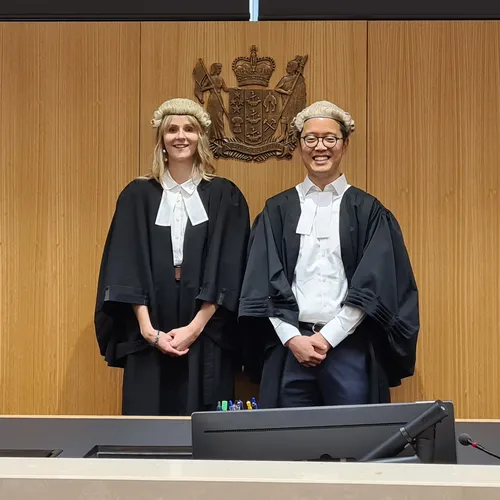
MyLaw is a New Zealand law firm with a focus on immigration law.

Our team is led by Michael Yoon, a New Zealand lawyer and member of the New Zealand Law Society.

He holds a current practising certificate and works across a range of immigration matters, from Section 61 Request matters to complex cases involving prior refusals, character issues, and multi-visa strategies.

Get in touch.

If you are thinking about whether a Section 61 request makes sense for your situation, an initial conversation is usually the most useful starting point. We will work through where you currently stand, whether Section 61 is the right route, and what the next step would look like — whether that is preparing a Section 61 submission, pursuing a different immigration pathway, or simply confirming which option fits.
Contact us to arrange an initial discussion about your situation.

5.0

420+ Google Reviews

420+ Google Reviews