Partnership Residence Visa Assistance — New Zealand

Build your life together in New Zealand — start with the evidence.

Licensed legal assistance with Partnership Residence Visa applications — from evidence strategy and narrative review through to lodgement, INZ responses, and second-chance matters after a decline.

The basics

What is the Partnership Residence Visa?

A residence visa from Immigration New Zealand for the partner of a New Zealand citizen, resident, or Australian citizen or permanent resident ordinarily resident in New Zealand — granted on a genuine and stable relationship with at least twelve months of living together.

  • Residency pathway

    Residence-class partner visa. The settled, indefinite version of the partnership pathway.

  • Eligibility

    At least twelve months living together with an eligible supporting partner before residence can be granted.

  • Sponsor

    NZ citizen, holder of a NZ resident class visa, or Australian citizen or permanent resident ordinarily resident in NZ.

  • Work rights

    Holder can live, work, and study in New Zealand on residence terms. Travel conditions typically apply for an initial period.

  • After residence

    Can lead to a Permanent Resident Visa over time, and form part of a pathway to NZ citizenship.

  • Assessment

    INZ assesses these applications holistically. The onus is on you to satisfy the immigration officer that the relationship is genuine and stable, that you've been living together, and that both partners are credible.

Not yet at twelve months living together?If you haven't reached the residence threshold, a Partner of a New Zealander Work Visa or Partnership Visitor Visa may be the right step now. Talk to us first — getting the sequencing right matters.

You and your partner want the same thing most couples in your position want: to stop counting down visa expiry dates and start planning the next decade together in New Zealand.

When our help makes a difference

Where we step in — and what we do

Some immigration processes are approved without much friction. Some situations carry real risk of delay, hard pushback or decline.

Real cases · Illustrative

Situations we've helped with

Every case is different. These are illustrative and don't guarantee a particular outcome.

Avoidable problems

Common risks — and how to reduce them

Visitor Visa applications can be declined or delayed for reasons that are sometimes avoidable with better preparation.

  • 01

    Genuine intentions assessment

    Weak ties to a home country, inconsistent travel history, or vague explanations of the purpose of a visit can raise concerns. A well-prepared application addresses these points directly with supporting evidence.

    High impact
  • 02

    Insufficient financial evidence

    Bare-minimum bank balances, unclear income sources, or missing sponsorship documentation can lead to requests for further information or decline.

    High impact
  • 03

    Health and character flags

    Applicants from countries without a low TB incidence may need a chest X-ray. Those with criminal history may need police certificates. Out-of-date evidence delays processing.

    Medium impact
  • 04

    Passport validity

    Your passport must be valid for at least three months beyond your planned departure date. Travelling on a passport close to expiry can result in being refused boarding or refused entry at the border.

    Medium impact
  • 05

    Misrepresentation

    Providing false, misleading, or incomplete information — even unintentionally — can result in decline, and may affect future visa applications.

    High impact
  • 06

    Timing

    Applying too close to your intended travel date, or failing to apply for an extension before your current visa expires, creates complications that are difficult to resolve.

    Manageable

Important constraints

What the Partnership Residence Visa doesn't cover

The Partnership Residence Visa is for couples who have met the twelve-month living-together threshold. If you haven't reached that point, or your relationship type sits outside the framework, a different pathway is the right starting point.

Not permitted

The Partnership Residence Visa is the wrong fit if any of these applies.

Lodging under the wrong pathway wastes time and money. We'll tell you up front if a different option fits your situation better.

  • Apply before twelve months living together

    A Partner of a New Zealander Work Visa is often the more immediate option.

  • Apply through a culturally arranged marriage

    A specific visitor-visa pathway applies — the Culturally Arranged Marriage Visitor Visa.

  • Apply in a relationship that isn't yet living together

    A General Visitor Visa may be relevant.

  • Get a Permanent Resident Visa now

    PRV is a separate, later step after the conditions of the residence visa have been met.

  • Get NZ citizenship now

    Citizenship is a much later step in a longer pathway.

Find the right pathway

Other options we can also help with

If a different immigration process fits your situation, we can take you there directly.

Working with us

What the process looks like

We will guide you step by step on your Partnership Residence Visa process, from start to finish.

  1. Initial enquiry

    Short email discussion to understand the relationship history, the supporting partner's status, and any issues that may affect the application. We'll tell you up front whether residence is the right step now or whether a temporary partnership visa is the better starting point.

  2. Service engagement

    Letter of engagement signed, invoice paid. We open the file and map the timeline against any current visa expiry.

  3. Evidence preparation

    We build the living together timeline, gather the evidence INZ expects, identify and explain any gaps, and prepare the supporter's side of the file — so the application reads as one coherent story before lodgement.

  4. Lodgement

    We file the application on your behalf and confirm receipt with Immigration New Zealand.

  5. Monitoring & response

    If INZ requests further information, asks for an interview, or schedules a home visit, we prepare you and handle the response.

  6. Decision & next steps

    We walk you through the outcome. If granted, we explain residence conditions and the path to a Permanent Resident Visa. If declined, we look at reconsideration or other procedural routes against the available deadlines.

FAQ

Frequently asked questions

A Partnership Residence Visa is a residence-class decision assessed holistically by an immigration officer — it is not a simple form-and-submit exercise. A licensed immigration lawyer reviews both partners’ eligibility, builds an evidence strategy mapped to the categories INZ actually assesses, identifies gaps or inconsistencies before they reach the officer, and prepares a coherent narrative that ties the documents together. That structured approach applies whether the relationship history is conventional or more complex. Professional support also means you have representation if INZ requests further information, schedules an interview, or declines the application. Rather than responding under pressure and within a deadline, you have someone who understands the procedural options and can advise on reconsideration, appeal, or an alternative pathway. A short initial discussion is usually enough to map out what the engagement would look like in your specific situation.

Earlier is generally easier than later. If we are engaged before lodgement, we can influence the evidence strategy, the narrative, and how the supporting partner’s role is framed — all of which are harder to change once the application is in front of an immigration officer. Common engagement points include: before lodgement as a full preparation engagement; before lodgement as a one-off review of a file you have prepared yourselves; after an information request from Immigration New Zealand, where a careful response is needed within a deadline; and after a decline, where reconsideration, appeal, or another pathway is under consideration and timing is tight.

A full engagement usually moves through several stages: an initial discussion to understand your situation and any known complications, a joint eligibility review covering both partners, an evidence strategy identifying what INZ is likely to look for and where the gaps are, preparation and review of the application and the Partnership Support Form, lodgement through current INZ channels, and management of information requests or interview invitations through to decision. Some clients prefer a narrower engagement — for example, an evidence review only, or representation limited to a reconsideration. We set scope at the start so the service matches what you actually need.

Most partnership applications have at least one unusual feature. Long-distance periods, blended families, cultural customs around cohabitation and public recognition, and stretches of informal cohabitation without documentation are common in practice, not exceptions. What matters under the INZ assessment is whether the relationship is genuine and stable and whether the evidence narrative addresses the elements INZ looks at. Unusual features do not by themselves undermine an application — unexplained features do. Much of the work in these cases is identifying which elements of the relationship will carry the evidence, and framing gaps as context rather than inconsistency.

Yes. The supporting partner is a core part of the application, not a secondary party. We work with the supporting partner on the Partnership Support Form for Residence, sponsor-eligibility considerations, prior-sponsorship history, and any character or deportation-liability matters that need to be addressed. Where there are issues on the supporting partner’s file, we consider them alongside the couple’s strategy rather than treating them as a separate problem. In practice, we treat the couple as the client unit for the purposes of the application.

Information requests and interview invitations are a normal part of residence-class assessment, not a sign that something has gone wrong. They usually mean the immigration officer wants to test a specific aspect of the file — the living-together evidence, a timeline gap, the credibility of one partner’s account, or a supporting-partner issue. We prepare responses within the deadline INZ sets, and where an interview is scheduled we take time to prepare both partners — not by scripting answers, but by making sure you each understand what the interview is likely to cover and why.

There are several, and the right one depends on the stated reasons for the decline, the applicable deadlines, and the facts of the case. The options generally include a reconsideration request to INZ, an appeal to the Immigration and Protection Tribunal, a Section 61 request in limited circumstances, a Special Direction request in narrow and exceptional circumstances, and judicial review where a legal error in the decision-making process is identified. We review the decline in detail before recommending a pathway, and we are careful not to pursue an option that is unlikely to serve the client’s position. Not every decline is worth challenging — in some cases the right recommendation is to re-apply with a stronger file rather than to contest the decision.

Both are licensed to prepare a Partnership Residence Visa application. The key practical difference is scope of representation. A licensed immigration lawyer can represent you across the full range of proceedings — including Immigration and Protection Tribunal appeals and judicial review in the courts — without needing to refer you elsewhere if the matter escalates. A licensed immigration lawyer also holds obligations under the Lawyers and Conveyancers Act, including legal privilege. At mylaw.co.nz, your file is handled by a licensed immigration lawyer from the outset, so representation is consistent whether the application proceeds smoothly or requires a second-chance pathway.

No. Immigration decisions are made by Immigration New Zealand on the specific evidence in each file, and the decision-maker exercises judgement within the applicable instructions. Approval-rate figures can mislead, particularly on a residence-class visa where assessment is holistic. What we offer is a consistent process, a named point of contact, and experience across the range of partnership situations — including the complex cases, second-chance matters, and supporting-partner scenarios described on this page. We do not promise outcomes or timelines, and we encourage clients to be cautious of any provider who does.

Material changes between lodgement and decision usually need to be considered against the application’s disclosure obligations. Examples include a change in employment, a change of address, a health issue, a significant family event, or a change in the relationship itself. If something material changes, tell us as soon as possible so we can assess whether and how it should be raised with Immigration New Zealand. Unreported changes that come to light later can create credibility or misrepresentation concerns that are harder to address than the underlying change would have been.

Stop counting down the visa. We'll handle the residence application.

Whether your immigration process is straightforward or involves complicating factors, we can help you understand your options and put your best case forward.

You and your partner want the same thing most couples in your position want: to stop counting down visa expiry dates and start planning the next decade together in New Zealand. A place of your own, work without restrictions, children settled, family nearby when you need them.
We assist couples across the full range of partnership residence matters — from applications where the evidence is already in order, through to situations involving long-distance periods, unusual living arrangements, prior refusals, or complications on the supporting partner’s side.

About MyLaw

MyLaw is a New Zealand law firm with a focus on immigration law.

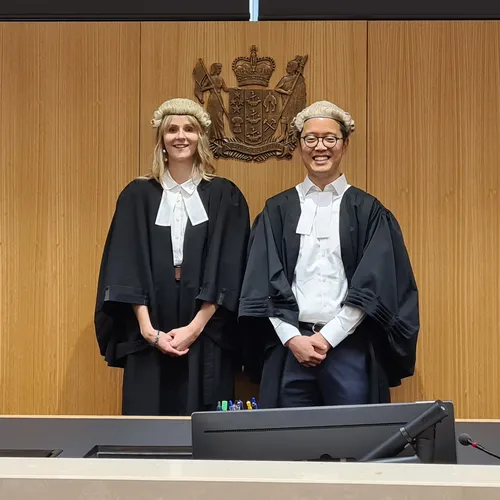
Our team is led by Michael Yoon, a New Zealand lawyer and member of the New Zealand Law Society.

He holds a current practising certificate and works across a range of immigration matters, from Partnership Residence Visa matters to complex cases involving prior refusals, character issues, and multi-visa strategies.

Get in touch.

If you would like to discuss a Partnership Residence Visa application — whether you are just starting, part way through, or dealing with a decline — we can tell you early on whether and how legal help is likely to add value to your particular case. We assist with both straightforward residence applications and more complex partnership situations.
Contact us for an initial discussion, or use the enquiry form to send us a short summary of your situation and we will come back to you.

5.0

420+ Google Reviews

420+ Google Reviews